01
(How to) Ask questions
(4 topics
)
Given the sheer volume of images generated in the life sciences every day, the odds are good that someone has already wrestled with the exact problem you're facing. Don’t hesitate to seek them out. The community is large, experienced, and genuinely welcoming to newcomers.

This section highlights a range of ongoing efforts within the community that aim to support others working on Research Data Management (RDM), along with a selected set of questions that are entirely appropriate to ask. RDM does not need to happen in isolation: local, national, and international communities and infrastructures can all provide valuable support for RDM initiatives—and it is precisely for this reason that we are running this spotlight series. No one needs to struggle through these challenges alone.
Often, one of the most significant barriers to effective RDM is not a lack of tools or infrastructure available, but hesitation, misunderstanding, and the feeling that one should already know the answers. In particular, in imaging research where data volumes are increasingly larger, and data standards and formats can evolve quickly, responsibilities and knowledge are often distributed across research and imaging scientists, core facilities, IT departments, libraries, and/or eScience (alternatively referred to as eResearch or cyberinfrastructure) services. Asking questions is thus critical and will pave the way for good RDM practice. Many of the challenges you face—file formats, metadata standards, storage capacity, access control, curation, long-term preservation—have been encountered before, often repeatedly, by others in your institution or in the wider community. RDM is inherently collaborative. No single individual or group can reasonably be expected to understand or be aware of all aspects of data management, from acquisition to archiving. As underscored above, there are many stakeholders involved in the management of research data at an institution. Questions help surface implicit assumptions, clarify responsibilities, and reveal gaps between what is expected and what is actually feasible. In many cases, asking a question early can prevent costly rework later, such as having to retrofit metadata annotations to existing datasets generated a few months or years ago, migrate data between incompatible systems, or resolve unclear ownership and access conditions at the point of publication. Importantly, questions also create opportunities for dialogue between researchers and support services, helping institutions improve guidance, infrastructure, and training over time. There is a range of bioimaging and RDM communities that can assist. Mailing lists, forums, workshops, helpdesks, online databases, chat platforms and informal conversations all play a role. Very often, questions that feel “basic” to one person turn out to be shared by many others. By asking them, you not only help yourself but also contribute to making RDM practices more explicit, more robust, and easier for the next person to adopt.
There's no such thing as a bad question — but here's a sense of what the community is best equipped to help with. Almost anything that affects how your data is generated, handled, described, stored, shared, curated, preserved, archived, or reused is fair to ask about. This includes questions that feel vague, uncertain, or premature. In fact, by asking questions, you may be able to refine what you need to know or do to manage your research data effectively. For example, it is reasonable to ask what constitutes “good enough” metadata in your field, which file formats are preferred or discouraged, or how much storage you should realistically plan for at the start of a project. It is also acceptable to ask who is responsible for specific tasks: who performs backups, who controls access, who decides when data can be disposed of (deleted or archived), and who supports data sharing at the end of a project. Questions about policy and compliance are equally valid. Many researchers are unsure how funder requirements, institutional policies, and legal or ethical constraints apply to their specific data, especially when dealing with human-derived samples, clinical collaborations, or multi-institutional projects. Asking how these rules are interpreted locally and what flexibility exists is far better than making assumptions. Librarians and data specialists at your institutions (e.g., data stewards and data managers) can help with compliance with policy, regulations, and laws. Similarly, it is fine to ask what tools or services are officially supported by your institutions to manage data, what happens if you deviate from them, and what the long-term implications might be. Importantly, you can ask questions that challenge the status quo. If a recommended workflow seems inefficient, unclear, outdated or unsuitable with how imaging data are actually produced, raising this can be constructive. RDM practices improve through feedback from real-world use. Finally, don't hesitate to ask for examples: data management plans, metadata records, repository submissions. Real examples are often the fastest way to understand what's expected. RDM is not about having all the answers upfront, but about knowing which questions to ask, when to ask them, and where to seek support.
We recommend starting close to home: talk to your local peers regularly. They may already have solutions to challenges you're facing, or you may find colleagues dealing with the same issues — making it a natural opportunity to join forces. Good starting points include imaging core facility staff, IT personnel, and librarians. If local support is limited, a wide range of national communities is available. While these groups are not geographically restricted and welcome all participants, be mindful that time zones can sometimes affect meeting schedules. Use the Catalogue of BioImaging Community Organisations to explore available communities and working groups. On the international stage, two communities stand out. The Confocal Microscopy Listserv (Summers et al. 1994) has supported imaging scientists for decades and remains one of the most established and welcoming resources in the field. Its name is broader than it sounds — anyone working in biological imaging is welcome. The Scientific Community Image Forum (Rueden et al. 2019), better known as image.sc, focuses on the software side of imaging and has quickly become an invaluable resource. New users sometimes find it a little overwhelming at first, but the community is actively committed to inclusivity. If you're unsure where to begin, please drop us a question on the [GBI’Spotlight Q&A form] and we will do our best to match you with an existing resource. Notably, image.sc includes a dedicated section on Data Management, directly relevant to the topics covered here.
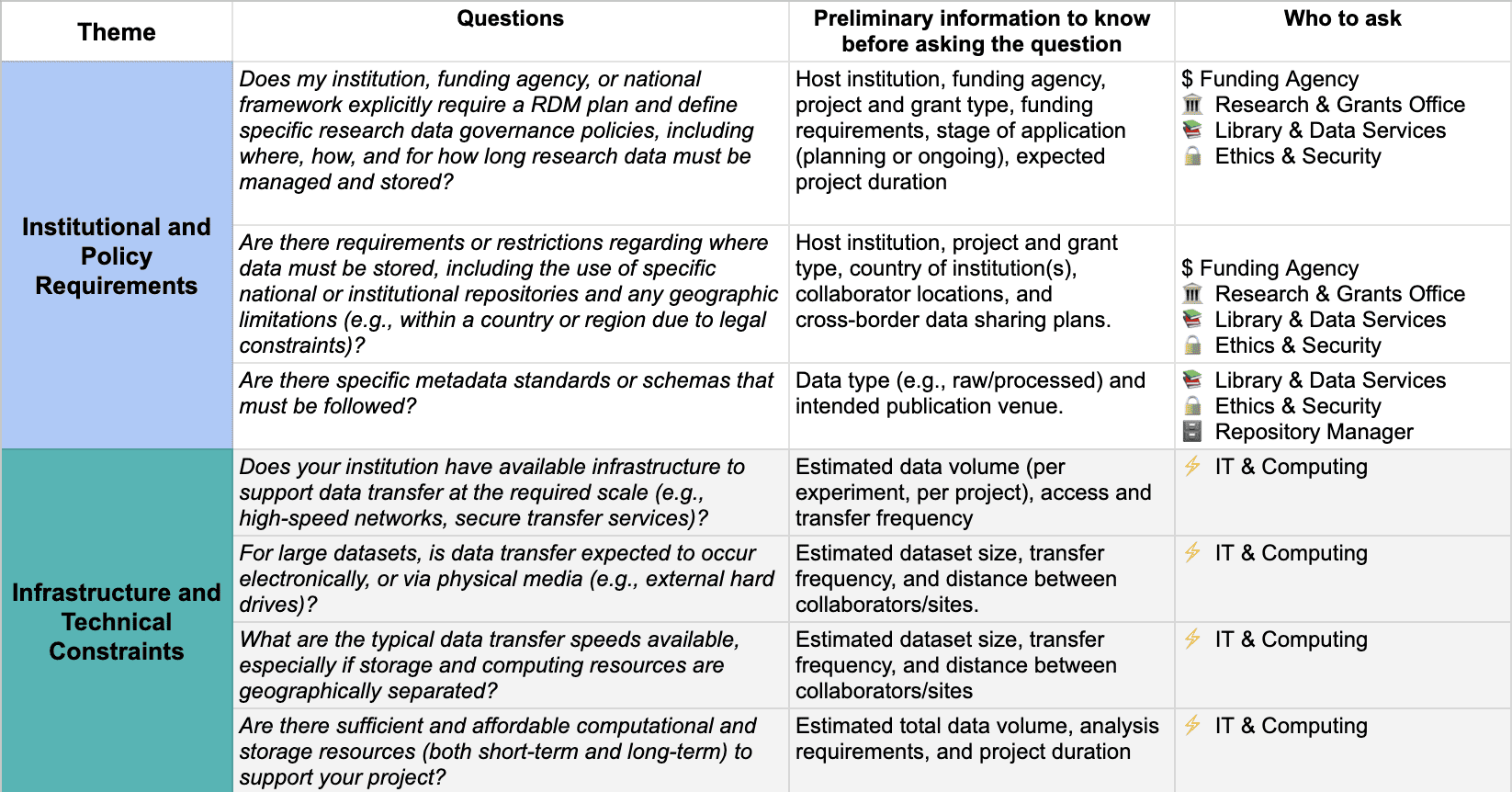
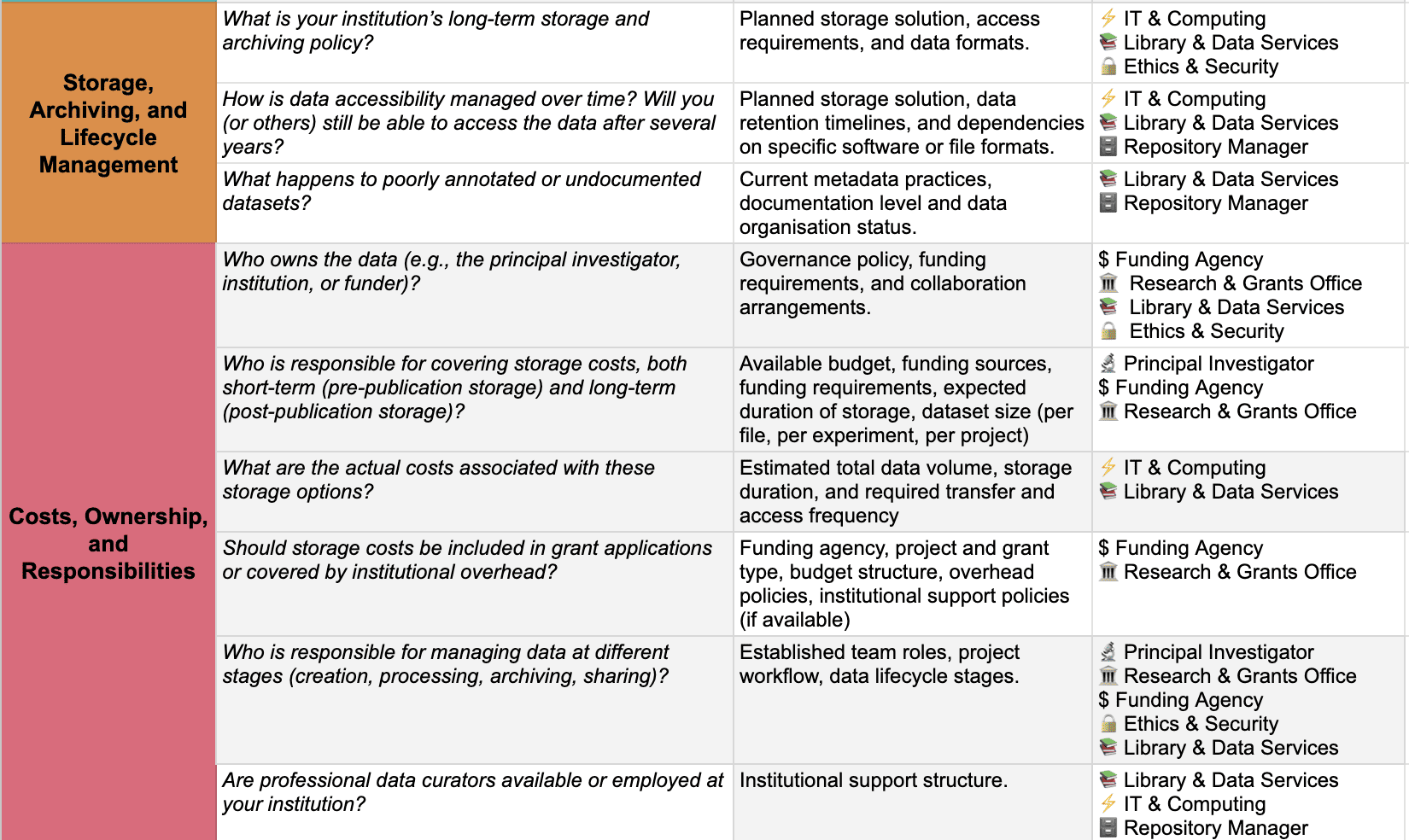
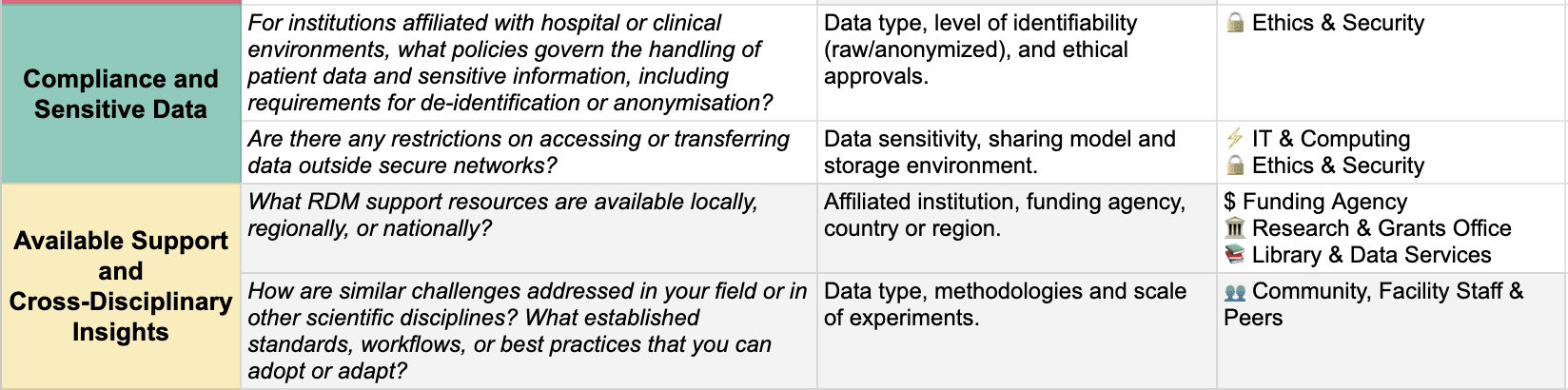
When engaging with others to find help, it is common for your initial question to lead to further queries about your local context. The recommendations you receive will depend heavily on the institutional environment, the available infrastructure, and the specific needs of your research project. Being prepared with key information about your circumstances makes it much easier for others to offer relevant and applicable guidance. The following questions will help guide your conversation with people who might help. Having answers to these and knowing your local situation will give them the best chance of helping you effectively.

This project has been made possible in part by a grant from the Chan Zuckerberg Initiative DAF, an advised fund of Silicon Valley Community Foundation.